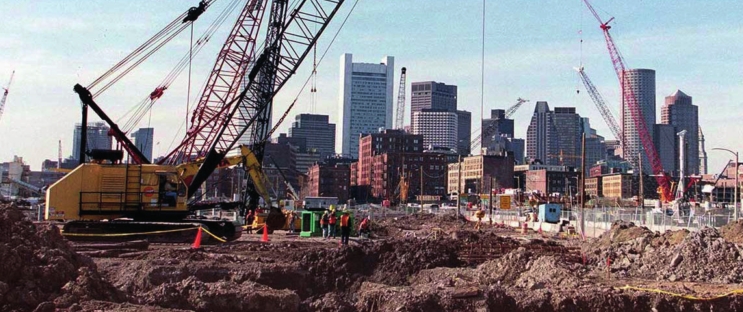
Boston has long been both New England’s economic engine and one of its largest producers of new housing as well.
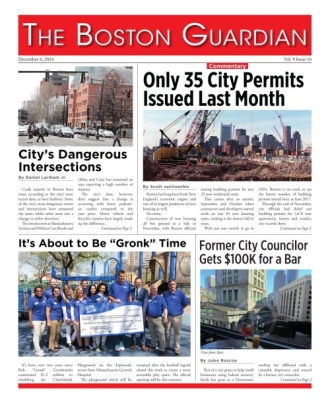
No more. Construction of new housing all but ground to a halt in November, with Boston officials issuing building permits for just 35 new residential units.
That comes after an anemic September and October when contractors and developers started work on just 85 new housing units, making it the slowest fall in years.
With just one month to go in 2024, Boston is on track to see the lowest number of building permits issued since at least 2017.
Through the end of November, city officials had doled out building permits for 1,676 new apartments, homes and condos, city records show.
That’s less than half the amount of housing built in the city back in 2022, as Boston’s decades long building boom ended.
Ditto
for 2021, when building permits were issued for 3,085 new housing
units, or 2020, when, despite a Covid shutdown in the spring, work still
began on 3,479 new units.
It
is quite a fall from grace for a city that was once the region’s leader
in the construction of new condos, apartments and homes.
Those
numbers, in turn, are likely worse than they seem, for they mask a deep
decline in new market-rate housing. If it were not for the revamp and
expansion of public housing complexes and other subsidized units, the
declines would be even steeper.
So, what’s keeping plans for new housing stuck on the drawing boards?
Certainly,
the Fed’s two-year long campaign to hike interest rates and rein in
inflation, which it is just starting to reverse, has played a big role.
The
same for construction costs, which, already high in the Boston area,
skyrocketed after the pandemic hit and the supply chain melted down.
But
also squarely to blame, say developers and others involved in
construction and real estate, are the Wu administration’s tough new
affordability requirements and the ban on fossil fuels in new buildings.
Developers are already struggling to get projects to pencil without these added costs.
“At
least for new market-rate development, the combination of these broader
economic factors and the city's affordability requirements is enough to
make a meaningful percentage of projects non-viable,” according to
Chris Lehman, co-founder of real estate
investment/development/management company Groma.
Yet
despite strong pushback over the past two years, the Wu administration
in October finally went ahead and raised the amount of money-losing,
subsidized units developers are required to include in each new
apartment and condo project to 17 percent.
Still,
there’s hope that as the Fed cuts rates, lenders who have pulled back
from new apartment and condo buildings will start to get back into the
game.
Scott vanVoorhis is a longtime Boston reporter specializing in real estate and the publisher of Contrarian Boston.