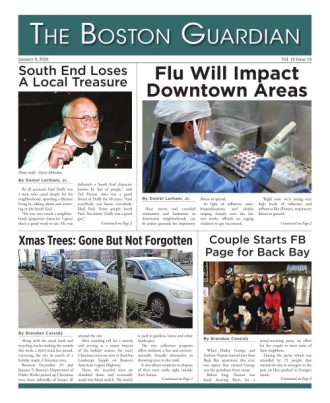
Busy streets and crowded restaurants and businesses in downtown neighborhoods can be prime grounds for respiratory illness to spread.
In light of influenza cases, hospitalizations, and deaths surging sharply over the last two weeks, officials are urging residents to get vaccinated.
“Right now, we’re seeing very high levels of influenza and influenza like illnesses, respiratory illness in general.
It’s been rising quickly, we’re seeing large numbers of urgent care and emergency room visits,” said Massachusetts Department of Public Health’s Bureau of Infectious Disease and Laboratory Sciences’ Medical Director Dr. Larry Madoff.
Between December 14 to 27, Boston saw a 126% increase in confirmed flu cases, and hospitalizations have nearly tripled, according to a press release by Boston Public Health Commission.
While most of those hospitalizations have been adults over 65, flu hospitalizations among children are double what they were at this time last season. Two children under the age of two have died from the flu in the city, bringing the state total of pediatric flu-related deaths to four. Dr. Bisola Ojikutu, commissioner of Public Heath for the City of Boston said during a press conference on Tuesday that the city hasn’t seen a pediatric flu related death since 2013.
“We have strong indication that we are seeing increased severity of illness, and we are concerned about this, particularly in children,” said Ojikutu.
A rise in flu cases this time of year isn’t abnormal, Madoff says, but it’s taken off more sharply, adding that they have recorded more cases at this point in the season compared to the last several years.
Madoff said that 20% of hospital admissions in the state are due to acute respiratory infections, worsening an already thinly stretched capacity.
“We run over 90% occupancy, just routinely. So, when the respiratory illness season hits it definitely has an impact on capacity,” said Madoff. “Of course, healthcare workers also get sick and when healthcare workers get the flu and stay home, that also diminishes healthcare capacity.”
Influenza thrives especially in crowded indoor spaces making Downtown neighborhoods rich in residents and busy restaurants and businesses, a prime for the virus to spread.
“In any situation where people are congregating indoors, there’s an increased risk of flu transmission. That’s something that we always are concerned about, particularly around the holidays,” said Ojikutu.
The most important thing people can do to protect themselves and others from the flu, says Madoff, is to get vaccinated. While they recommend most people get their flu vaccine around October well before the season is in full swing, he says that it’s not too late, as the season lasts well into the spring and doesn’t usually peak until February.
Ojikutu said that even though the predominant flu strain evolved after the current vaccine had been developed, data shows that it is still effective in reducing the risk of severe illness, hospitalization and death. Vaccination rates state wide are lower than they have been for the last five years, says Madoff, with only about a third of the population vaccinated against the flu so far.
In response, Boston will hold at least six vaccination clinics in the month of January requiring no appointment, identification or insurance, said Ojikutu. Dates and times for those clinics can be found at boston.gov/vaccine-clinics.
The second most important thing, Madoff said, is for people to stay home when they are sick, staying away from crowded indoor spaces in particular.
“The flu is one of the illnesses that we fear the most. That infectious diseases doctors like myself are very fearful [of],” said Madoff.