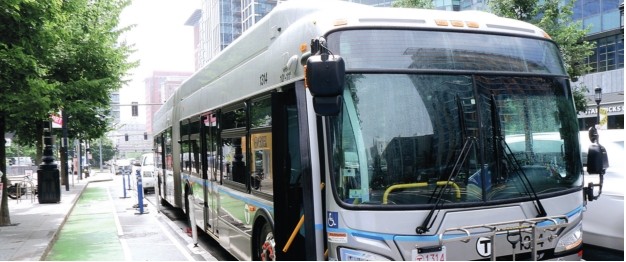
Much of the Seaport lies beyond the direct reach of the existing MBTA system, which runs to the west of the popular work and recreation destination. This often makes it more appealing to tackle the commute by car, than to deal with switching public transportation or walking several blocks.
But a new grant, in its early planning stages, is looking at ways to get commuters out from behind the wheel in the Seaport and other neighborhoods.
“There’s very little public transportation in the [Seaport] neighborhood, and the government has to listen closely to residents and businesses and workers about what they want to see,” said City Councilor Ed Flynn who represents the area.
Boston drivers spent 88 hours stuck in traffic in 2023, according to INRIX’s Global Traffic Scorecard. Reducing vehicular street congestion has been a major focus of Mayor Michelle Wu’s administration and will continue into 2025 with the $21.6 million congestion relief grant from the Federal Highway Administration.
Still in its early planning stages, the LINKUP Greater Boston initiative is aimed at addressing gaps in existing public transportation options.
The
plan is to bring new shuttles to Seaport, Charlestown and
Allston-Brighton, and additional Bluebikes stations to even more
neighborhoods. A spokesperson for Mayor Wu’s office said it was too
early to know if additional bike lanes will be added as part of the
initiative.
“I’m
always concerned, when we discuss public transportation, what impact
will it have on our seniors and persons with disabilities. That’s part
of the discussion that has often been ignored by government,” Flynn
said. New shuttle services will focus on “first-mile, last-mile"
service, a philosophy that emphasizes transit riders’ ability to get
from home to the nearest MBTA entry and from their MBTA exit to their
destination. Additional e-bikes and pedal bikes could serve the same
purpose while also incentivizing bikes over cars for local travel.
The
expansion of Bluebikes services will bring nearly 400 new bikes, a
quarter of them e-bikes, to the existing bike share network and optimize
the placement of Bluebikes docking stations. Half of the new docking
stations will support battery charging for e-bikes, to reduce the need
for manual battery-swapping, and some existing stations will move from
on street to off street, the Metropolitan Area Planning Council said in a
press statement.
“Easing
traffic congestion is only possible if we offer accessible alternatives
to cars, and this funding makes it possible for us to do so,” said
Boston Mayor Michelle Wu in the statement. The mayor’s spokesperson said
that “extensive community input will guide the planning and
implementation of the project,” but Councilor Flynn was disappointed by a
slow communication chain that has left his constituents mostly in the
dark on details of the project, which was announced the week of October
17.
“The residents
must be part of the process and if they’re excluded from discussing the
proposal, it’s a failure,” Flynn said. “We have to listen closely to
residents and understand what their concerns are and address them before
money is even allocated. It should have been done at the very beginning
stages.”
The grant
also provides for more than just infrastructure funding. To help with
the emphasis on multi-mode public transportation, the grant will also
fund development of a trip planning app that aims to account for the
various transit options and serve as a one-stop payment point. But Flynn
is skeptical of allocating funding to an app, due to results with
similar projects.
The
Zum bus-tracking app that came with the new school year this fall, for
parents of public school children, launched to reports of missed pickups
and late dropoffs. Boston Public Schools said that the app would see
improvements as it collects more data.
The
congestion relief initiative will also be undertaking a transit
incentives study. According to the spokesperson, the study will research
the impact of financial incentives on encouraging commuters to use
public transit and bike-sharing options over driving.
There
is not currently a timeline for the planned community engagement
efforts or for the eventual implementation of the project.