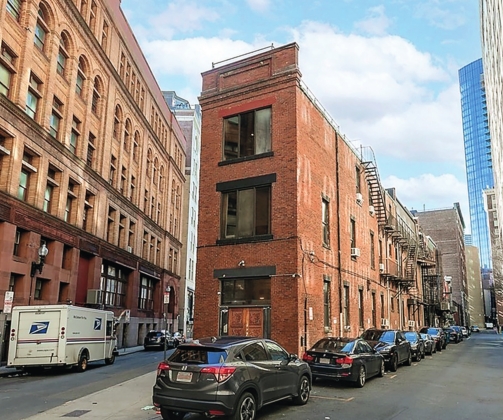
An apartment building in the Back Bay seems slated for sale to a short-term rental company, just the latest example of housing stock degradation as the city struggles to enforce its prescribed limits.
19 Stanhope Street has been listed for sale to what tenants allege is a company that wants to convert the housing into short-stay rentals.
While the city has laws championed by now-mayor Michelle Wu regulating short-term rentals like AirBNBs, statistics show that they’re seldom followed.
A public listing by The Charles Realty says the 3-story apartment complex at 19 Stanhope Street is already “under agreement” with a buyer.
The Neighborhood Association of the Back Bay (NABB) says they’ve been told the sale is expected to close soon. The buyer is apparently STARS of Boston, a real estate company under the acronym Short Term Apartment Rental Solution.
While NABB doesn’t have enough information yet to take a solid stance on the transaction, chairman Martyn Roetter said the group would definitely take a position if it appears before the zoning board and isn’t likely to look favorably on more short-term rentals. City tax documents say the building’s owner is Michael Bornhorst, a Marblehead real estate developer and business coach, but Bornhorst did not respond to a request for confirmation of his ownership or the status of the property.
19 Stanhope Street is itself not a massive apartment building, offering ten units, but it’s a microcosm of trends in housing throughout the city. The Alliance of Downtown Civic Organizations (ADCO) says Boston’s short-term rental ordinance has in practice done little to slow the degradation of housing stock.
Their data from 2023 indicates that only about one in five short-term rentals is properly registered with the Inspectional Services Department (ISD) with up-to-date codes.
A roughly equal portion is accounted for by the abuse of loopholes, such as short-term rentals claiming to be longer term lodging houses. Others use hospital stay exemptions, ostensibly gatekept by a required letter from a medical institution but which ADCO says are “widely abused.”
The executive suite exemption is another culprit, this time through the Boston Planning and Development Agency or Zoning Board of Appeals. While only 18 properties are supposed to skirt the hotel tax with this occupancy use, ADCO’s survey of Airbnb listings found another 192 claiming the exemption.
The largest slice of the survey by far were listings claiming to have stays longer than 28 days, thus skirting the ordinance, but which have more than 12 reviews per year. These entries made up a full 41% of the market.
The last 23% of the market is accounted for by outright breaches of the law, with owners fabricating codes, duplicating codes or using them beyond their expiration date.
ISD initially responded to a request for an interview about the difficulties of enforcement and causes of regulatory failure, but at time of publication has not responded to further messages attempting to arrange comment.
South End State Representative John Moran is among the politicians pushing for the legislature to take action closing loopholes in the city’s short-term rental ordinance.
“As we continue to experience a housing shortage, adherence to our ordinance is more important than ever,” he said. “Recently there have been a few examples in parts of my district, including the South End and Back Bay, where long-term tenants are being displaced while companies leverage loopholes in legislation to create whole buildings of short-term rentals. I plan on working closely with my fellow legislators and neighborhood leaders to address this issue.”


