Every day in Boston, more than 100,000 vehicles drive under the Bowker Overpass, which stretches across the Interstate 90 turnpike and Commonwealth Avenue from Fenway to Storrow Drive. A Department of Transportation (BTD) plan currently exists to revitalize and widen the steel beam bridge but in its current state, the Bowker Overpass is a relic in more ways than one.
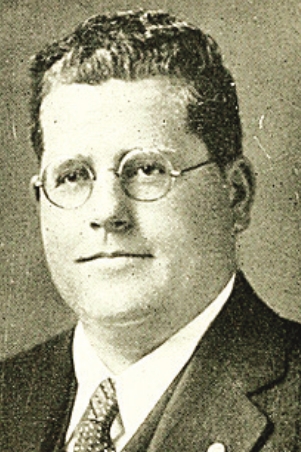
In 2016, after the Boston Marathon Bombing, “Boston Strong” was proudly painted on the face of the overpass in bold blue and gold. But the state senator from which the bridge draws its name is far from a symbol of city unity. The late Philip Bowker, a Brookline resident and senator for Norfolk-Suffolk from 1946 to 1958, was a staunch red-scare politician who carried on the work of U.S. Senator Joseph McCarthy in Massachusetts even after McCarthy’s censure by the U.S. Senate for abusive investigations into Americans’ Communist Party involvement.
In the spirit of curbing communist activity in the Commonwealth, Senator Bowker’s Bowker Commission, established in 1953, was responsible for legislation that strengthened authorities’ power to issue search warrants for subversive documents, made it a criminal offense to refuse to testify before a legislative committee and established a division of subversive activities in the state police.
The Commission began its investigation at Boston’s centers of higher learning, targeting professors believed to have Communist sympathies, but quickly turned its attention to the leaders of labor organizations like the United Electrical Union. “I’ve got writer's cramp from signing so many summonses,” Senator Bowker joked after asking Governor Herter to assign police to investigate 600 people.
This earned Massachusetts recognition as the most McCarthyite state in a 1954 poll.
In 1955, the Commission published the biographical details of 85 persons it deemed associated with the Communist Party. Those details were then published in The Boston Globe.
Most of those named on the list, such as Brookline high-school graduate and WWII veteran of the Army Air Corps Marcus Alper, had simply invoked their right not to testify.
“Recent experience has shown that witnesses called under circumstances similar to this suffer much public misunderstanding,” Alper wrote in a May 1953 statement where he declined to testify. “[The Constitution] teaches us that all Americans may hold inviolate their opinions and beliefs. Any intrusion in this area seems to me not only to violate the Constitution but at the same time to involve some loss of human dignity.”
Senator Bowker once invoked the drafting of a thousand Massachusetts residents into the Army as cause for his crusade in an October 16, 1952 “Report to Brookline from Beacon Hill” in The Brookline Chronicle.
“When you note [the draft] and then read in the press about professors aiding the Reds and getting mixed up in subversive affairs, it should make your blood boil,” Bowker wrote. “All the more need of something to be done to curb communistic activity right here on the home front.”
He, however, seemed to take no issue with destroying the lives of veterans through discarding the rights they fought for.
In a 2022 letter to the editor in Patch, Brookline Town Meeting member Len Wholey decried the naming of a Brookline Municipal Golf Course clubhouse after the late Senator Bowker, speaking with Mark Alper’s son, Joshua Alper.
Wholey quotes Joshua as saying the accusations “had a profound effect on our family. It made our parents tense and anxious to an extreme degree,” and that the family was unable to obtain passports for years.
In his own failed 1958 re-election campaign, and in the decades since his 1966 death, Bowker has been distanced from this legacy, in part due to the honor of decades old dedications that proudly bear his name, but not his legacy.
“I think we should tear down the overpass and make a seamless connection between the Emerald Necklace and the Charles River,” Wholey said in an interview. “If that’s impossible, maybe it's fitting that one of the ugliest roadways in Boston should be named after someone who vilified innocent people. I wouldn't want to change the name to someone else who is respectable.”