
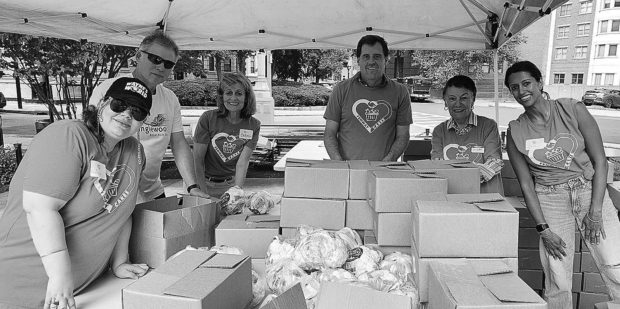
The free biweekly food distribution program run by the Fenway Cares Mutual Aid Initiative will remain in operation, thanks to state funding granted in the state's 2025 budget. Put forward by State Representatives Jay Livingstone and Dan Ryan, the budgetary amendment guarantees $50,000 towards the program’s food costs.
“We were looking at deciding whether to shut down our program in the fall,” said Marie Fukuda, a representative of the Fenway Civic Association, one of six organizations that make up the Fenway Cares collaborative. “This will allow us to continue through to at least February.”
Fenway Cares began in 2020 as a COVID-19-era mutual aid effort from the Audobon Circle Neighborhood Association, Fenway Alliance, Fenway Civic Association, Fenway Community Center, Fenway Community Development Corporation and Operation P.E.A.C.E.
The program began with the biweekly delivery of 50 boxes of fresh fruits and vegetables by food truck, to now delivering over 100 boxes and disturbing over 300 more from the Fenway Community Center and Symphony Community Park every other Wednesday. The next distribution date will be September 11.
“We thought that when we started this, it would fill a short-term emergency need for people who lost their jobs or needed some extra food support because of the pandemic. But what we found out, was that the people who needed food had actually been here all along,” Fukuda said. “People on fixed incomes have to make hard choices about their food, and oftentimes because of the rising cost of fresh fruits and vegetables, forego exactly those in their diet.”
Fenway Cares now primarily serves neighborhood’s elderly residents living on fixed incomes.
The food costs of each distribution have risen to just under $5,000. Not included in the state’s $50,000 budget allotment is the additional cost of hiring translators, especially Mandarin speaking, to assist with distribution.
“We used to get our food from a company that would take excess food from grocery stores and other markets, but they lost their warehouse in Boston,” Fukuda said. “I think the problem for the Fenway is there aren’t any places where food pantries could pop up and store food for us.”
Fukuda said that the rising cost of groceries and the lack of local food security infrastructure have continued to put financial pressure on the organization, and without regular infusions of state funding, its vital services would taper out.
To date, Representative Livingstone has secured $250,000 in state funding for Fenway Cares.
“I have seen the impact that Fenway Cares has had on the community since its inception,” Representative Livingstone said in a statement made over email. “The value it has brought to the community is immeasurable, as it has addressed the immediate needs of the residents.”
“[Representative Livingstone] came out with his staff and volunteered, not just once, but was a regular fixture at Fenway Cares for about a year,” Fukuda said.
Fenway Cares still operates almost entirely on the hard work of volunteer staff. Deliveries are made possible by volunteer drivers from Northeastern University’s City and Community Engagement team. A partnership with Mass General’s Community Care Vans also helps Fenway Cares pair mobile healthcare services with the distribution of fruits and vegetables.